Mahzor

New York Public Library

Churches

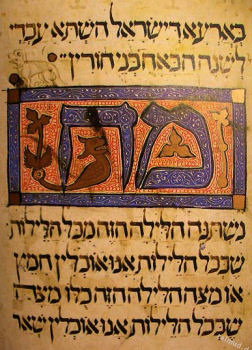
Sarajevo Haggadah

Mah Nishtanah

Sarajevo haggadah

Antaea Darom

Israeli women's art

Action

Torah as music

Ben Heine

Action

ceramic bowl

Mohammad Said Kalash, "Offering Reconciliation" exhibit (photo: Ilan Amihai)

Action

Punch and Judy/Pinchas and Jamila

Avi Katz

Action

David Grossman

Ben Heine

Action

Eldrige Street shul

Lower East Side

Action

Dove

Ben Heine

Action

Two birds

Hoda Jamal

Action

Israeli and Palestinian boys

from documentary, Promises

Action

Cat in the Hat

Yiddish version

Action

Daylight through the Wall

Banksy: graffiti art on Separation Wall

Action

Maurice Sendak's Brundibar set

New Victory Theater (photo: Nan Melville/NYT)

Action

Daniel Barenboim, West-Eastern Divan Orchestra

Palestinian-Israeli musical ensemble (photo: Kerstin Joensson/AP)

Action

Great Day on Eldrige Street

N.Y.'s klezmer greats celebrate shul rededication (photo: Leo Sorel)

Action

Joint Appeal for Peace

(Avi Katz)

Joint Appeal for Peace

Ketubah, Ancona, Italy (1772)

(Jewish Theological Seminary library)

Ancona ketubah

Posts Tagged ‘world-music’

Memories of a Palestinian Wound

Saturday, April 23rd, 2011


I read a wonderful review of a new album, Baghani, by the Palestinian performer Amal Murkus that made me want to go right out and buy it–or at least listen to it.  Unfortunately, you can’t–at least not easily, since no Israeli record company is yet distributing it (it figures).  One of my Facebook Friends pointed me to this amazing YouTube video of the song, Memories of a Palestinian Wound, which is a song Murkus is well known for singing.

But based on hearing her version of this song and how different it is stylistically, I’m guessing that a comment in the Youtube video thread that the singer is named Omaimi, may be correct.  At any rate, this is a slashing, powerful version of the song.  Not knowing Arabic, I don’t know the words, but the pictures tell the entire story and they’re masterfully counterposed with the music.

The arrangement sounds like a combination of traditional Arabic music with almost a rock overlay of jangling electric guitars.  No, it’s not pop music in any western sense, but it conveys its anger in a way that is somehow western, very direct, very modern, while remaining true to an Arabic musical idiom.  To my readers who know Arabic, please fill in what I’ve left out. And please, if anyone has any of the music from Baghani, let me know. I’d love to feature it here.

If this song is the same as the Mahmoud Darwish poem, Diary of a Palestinian Wound, then you’ll find the lyrics here.

J Street Pimps Noa’s U.S. Concert Tour, Israeli Performer Who Supported Gaza War, Accused Hamas of Rape

Saturday, April 24th, 2010

Lately J Street has made a few lame political decisions, one of them being joining with Stand With Us and the ADL in denouncing the Berkeley student divestment initiative.  I’ve also been annoyed to discover that J Street is promoting Noa’s national concert tour:

STG Presents NOA with special guest MIRA AWAD
The Moore Theatre, Thursday,  April 29, 2010, 8:00pm

Please join xxxxx in supporting the work of J Street:

Welcome Israeli artist Noa (Achinoam Nini) and Palestinian artist Mira Awad to Seattle. Noa and Mira will speak about their music and why they support J Street.  This is a great chance to meet two talented artists face-to-face, and learn more about the work of J Street , in a beautiful lakefront setting.

Achinoam Nini, also known by her professional name Noa, is Israel’s leading international concert and recording artist.  Over the span of a 15 year career with Gil Dor they produced four successful Israeli albums and four international albums.

Mira Awad, a Palestinian actress, singer and songwriter living in Israel, collaborated with Noa (Achinoam Nini) in her album “Now”, Idan Raichel in his second album “Mema’amakim”, Greek singer George Dalaras, and with hip hop artist Guy Mar. Mira is an actress with the Tel-Aviv Cameri Theatre, and on the TV series “Arab Labour”. She is featured in the movie “The Bubble”,  recorded the theme songs for the films “Forgiveness” and “Lemon Tree.” Her debut album “Bahlawan-Acrobat” was released in May 2009, and was musically produced by guitarist Amos Ever-Hadani.

They’re apparently unaware that Noa voiced strong support for Operation Cast Lead, claimed Gazans sought Hamas’ overthrow, and expressed a devout wish that Israel would accomplish the task for them.  She also called Hamas “Nazi-like” and ” a cancer,” accusing it of acts of rape and other heinous crimes which were baseless accusations.  Here’s a taste of her ranting in case Jeremy Ben Ami didn’t do his due diligence before endorsing this woman’s performances:

I see the ugly head of fanaticism, I see it large and horrid, I see its black eyes and spine-chilling smile, I see blood on its hands and I know one of its many names: Hamas.You know this too, my brothers. You know this ugly monster. You know it is raping your women and raping the minds of your children. You know it is educating to hatred and death.  You know it is chauvinistic and violent, greedy and selfish, it feeds on your blood and screams out Allah’s name on vain, it hides like a thief, uses the innocent as human shields, uses your mosques as arsenals, lies and cheats, uses YOU, tortures you, holds you hostage!!

I know this is true my brothers!! I know YOU know the truth!! And I know you cannot say it for fear of life so I will say it for you!!

…I know that deep in your hearts YOU WISH for the demise of this beast called Hamas who has terrorized and murdered you, who has turned Gaza into a trash heap of poverty, disease and misery. Who in the name of “allah” has sacrificed you on the bloody alter of pride and greed.

…I can only wish for you that Israel will do the job we all know needs to be done, and finally RID YOU of this cancer, this virus, this monster called fanaticism, today, called Hamas. And that these killers will find what little compassion may still exist in their hearts and STOP using you and your children as human shields for their cowardice and crimes.

Here is how Noa attempted to justify Israel’s election of the rightist Netanyahu government.  She explained that the result shouldn’t be surprising in light of:

…The INCREDIBLE propaganda spread around the world by the ENORMOUS amount of Anti-Semites and Jew- haters who are bent on destroying Israel. When the Israeli population sees the lies spread around, the hypocrisy of the world who sees Israel as the aggressor rather than a country acting in self defence, a world whose eyes are blind to the killing and the massacres by the MUSLIM fanatics of the Palestinian people, of Fatah, of women who dare to raise their head, of ANYONE who does not agree with them, when the Israeli people who number 7 million, 1.5 million of them Arabs, see around them 1.5 BILLION Arabs, with hardly ONE voice raised in peace, compared to the ENDLESS Israeli and Jewish voices raised in peace

I realize that Noa is a performer and not a political analyst.  But if she wants to make public political statements she has a responsibility to speak the truth and use facts rather than lies and prejudice.  The passages above reveal her to be woefully uninformed about issues on which she claims to have some expertise and certainly some passion.  Given the venom in these statements, why would J Street want to support her?

J Street also doesn’t seem to realize that the Israeli government, through the Israel Broadcasting Authority, cooked up the idea of Noa and Israeli Palestinian performer Mira Awad entering the Eurovision song contest singing a banal There Must Be Another Way.  They also sing a baleful version of the Lennon-McCarthy, We Can Work it Out, as if solving the Israel-Palestine conflict was as easy as repairing a lover’s quarrel.  For this they were “rewarded” with 16th place in the competition–a lackluster showing helped by the fact that the audience clearly saw through the hasbara nature of the performance.

J Street appears to believe that Noa and Awad together represent the best of what Israel is capable.  Under other circumstances I might agree.  I quite like Noa’s music and I find Mira Awad a compelling performer and I’ve written this here before.  But I do not see how an American Jewish peace group can lend support to this enterprise given Noa’s shameful behavior during the Gaza war and her co-optation by the government to do its bidding in the propaganda wars subsequently.

Udi Aloni wrote a powerful critique of Noa’s support for the Gaza war.

I want to make clear that when J Street stands up for the right thing, I’m there to support it and I have done so.  But when it steps in dog-doo as it has here, it deserves criticism and will hear it from me.

Reblog this post [with Zemanta]

Sholem Aleichem’s Seder, the Sarajevo Haggadah, Moses’ Hidden Identity and Dayenu

Saturday, April 11th, 2009
sarajevo haggadah ma nishtanah

Sarajevo haggadah, 'Mah nishtanah' page (Talmud.de)

For some reason, I haven’t felt motivated to write a specifically peysadika post this year. But I’ve published some interesting material in years past to which I’ll draw attention:

Sholem Aleichem’s story, Elijah the Prophet is a children’s fable about a young boy faced with a seder dilemma: if he falls asleep after drinking the cups of wine Elijah will take him away and he’ll never see his parents again.  I’m proud to say that I translated this story and that it is not available as far as I know anywhere else (in English).  I’m not proud to say that every Jewish publisher I’ve approached has rejected it.

A few years ago I produced a Jewish music radio program on Passover music which you might enjoy.  It features contemporary Israeli, Sephardic, and American Jewish traditional and original compositions.

I wrote a post about the amazing nine lives of the Sarajevo Haggadah.

A few years ago, I also wrote this meditation on the lives of Moses and Abraham in the context of modern Jewish identity.  The Moses portion of the essay, in particular, deals closely with the Passover-exodus story.

I wish you all a sweet and joyous holiday: a zisyn Pesach.

Noa Calls for Israel to Rid Gaza of Hamas ‘Cancer’

Tuesday, January 27th, 2009

I don’t know what demon possessed Ahinoam Nini’s brain when she wrote a long passionate letter to Palestinians during the Gaza war in which she railed against Hamas and called, in the most vehement terms, for the IDF to uproot it.

First a word of background: Noa is one of Israel’s premiere performers with a voice of honey.  She is known for her pro-peace views and performs regularly with Israeli Arab performers and singers like Cheb  Khaled (with whom she sang a breathtaking cover of Imagine featured here).  She is to perform along with Mira Awad (also previously profiled here), one of Israel’s most prominent female vocalists, in the Eurovision Song Contest, as Israel’s entry.

But a strange thing happened to Noa on the way to Eurovision.  While sunk in a funk during the Gaza invasion, she decided to pen her plaint for peace and to tell the world what was wrong with Hamas and its Palestinian supporters.  While there is much in her blog entry that is laudable and true, the entire balance is skewed heavily against Hamas and shows such a fundamental misunderstanding about what really happened in Gaza and why that I’m left dumbfounded that she could’ve gotten things so utterly wrong:

I have often spoken out against fanaticism in my country, for I find it repulsive and unbearable. In government, in settlements, in synagogues, I am passionately against it. I have risked my career and my well-being for this belief.

Now I see the ugly head of fanaticism, I see it large and horrid, I see its black eyes and spine-chilling smile, I see blood on its hands and I know one of its many names: Hamas.

You know this too, my brothers. You know this ugly monster. You know it is raping your women and raping the minds of your children. You know it is educating to hatred and death.  You know it is chauvinistic and violent, greedy and selfish, it feeds on your blood and screams out Allah’s name on vain, it hides like a thief, uses the innocent as human shields, uses your mosques as arsenals, lies and cheats, uses YOU, tortures you, holds you hostage!!

I know this is true my brothers!! I know YOU know the truth!! And I know you cannot say it for fear of life so I will say it for you!! I fear nothing!! I am privileged to live in a democracy where women are not objects but presidents, where a singer can say and do as she pleases! I know you do not have this privilege (yet…but you will, inshallah, you will…)

I know you are SICK of being held hostage by this demon, this ugly beast, not in Gaza, not in Iran or Iraq or Afghanistan, not anywhere!!! You are a people destined to flourish in peace! Your majestic history is overflowing with creativity, literature science and music, endless contributions to humanity, not crippling, torturing fanaticism, yelling Jihad and Shahid!

I see you sometimes, out in the streets, demonstrating with the monsters, yelling ‘death to the Jews, death to Israel!! But I don’t believe you! I know where your heart is! It is just where mine is, with my children, with the earth, with the heavens, with music, with HOPE!! You want nothing of this but you have no choice! I see through your veil of fear my brothers, through your burka! I embrace your hopes for they are mine!

My country has made many many mistakes over the years, I have watched it miss so many opportunities, and as a citizen of this country I am the first to admit it and criticize its foolery. I demonstrate, I vote, I speak out, I sing loud and clear.

But, now, today, I know that deep in your hearts YOU WISH for the demise of this beast called Hamas who has terrorized and murdered you, who has turned Gaza into a trash heap of poverty, disease and misery. Who in the name of “allah” has sacrificed you on the bloody alter of pride and greed.

My brothers, I cry for you. I cry for us too, yes, I cry for my fellow countrymen suffering the bombs in the south and north and everywhere, I cry for the kidnapped soldiers and the murdered ones, for their bereft families, for the innocence lost forever, but I cry especially painfully for you for I know your suffering, I feel you, I feel you!!

I can only wish for you that Israel will do the job we all know needs to be done, and finally RID YOU of this cancer, this virus, this monster called fanaticism, today, called Hamas. And that these killers will find what little compassion may still exist in their hearts and STOP using you and your children as human shields for their cowardice and crimes.

And then… then, maybe, Inshallah, we will again have an opportunity… we will again pick up our broken bodies and souls and walk slowly towards each other, reach out a tired hand, look into eyes filled with tears and with a choked voice say: “Shalom. Salam. Enough. Enough my brother ….

The level of sheer condescension and cultural superiority represented by this statement is mind-boggling.  It shows that even those who speak out of heart-felt passion and concern can sometimes make fools of themselves.  Passion must be informed by judgment and analysis.  This Noa lacks.  She blames Hamas for all the evils of Palestinian society.  She claims she is critical of her own goverment and society, but whispers snot a word about WHY there is poverty, suffering and misery in Gaza.  What about the siege?  Does she think that Hamas prefers Gaza to not have food, water, power, medicine or commerce?  Where is the moral intelligence that we so often hear in her music?  How did her judgment entirely desert her?

I am not claiming that Hamas are angels.  I would not vote for Hamas if I were a Palestinian.  But how can Noa deign to tell the Palestinians what they are thinking in their hearts about Hamas?  Is this the ultimate chutzpah or what?

Noa and Awad were scheduled to perform together at a Tel Aviv concert to benefit Gaza civilians but Israeli Arab and Jewish intellectuals excoriated Noa for her diatribe and she withdrew from the concert (here is Israeli director, Udi Aloni’s eloquent rejoinder).  And rightly so.  What right does she have to attempt to ease the suffering of those civilians through the concert, when she defended the very military operation by her own army which caused it?

This is one of those times when you scratch your head and say of someone you know to be more intelligent than that: what were they thinking?  And by the way, Noa, your cover with Awad of We Can Work It Out is second-rate.  The song doesn’t begin to delve into the depths of the suffering of this conflict as Imagine does.

There is some kind of moral disconnect that happens with Israeli liberals.  They feel opposing their own government’s policies places them on such a high moral plane that they can start telling Palestinians how they should live their lives.  It’s offensive and distasteful.  Whatever happened to a bit of humility and introspection?

Thanks to reader Peter Drubetskoy for the original tip and finding the following subsequent post that Noa wrote after she was drubbed by her fans for her original comments:

about a week ago i posted a letter to my palestinian brothers everywhere.

in my original letter, i was very harsh in my words regarding Hamas. I was pointing a finger at them clearly, this came from my gut, from the deepest, most hurting place in my heart. The reason i did that, is that the horrible stories i have heard about Hamas from my Palestinian friends who used to live in Gaza (and escaped, barely, from death by Hamas), plus the videos on youtube of hamas using children as a human shield, or throwing fatach personnel blindfolded and cuffed from the roof of a building, plus endless testimonies from Palestinians…

All of this lead me to a very harsh reaction, praying the Palestinian people would finally be released from the clutches of this horror. I have not changed my mind about atrocities, cruelty and killing, but i know that pointing fingers at names and symbols is not the solution.

…I am willing to change my mind at any moment about anyone who is willing to stand up for co-existence, freedom and mutual respect and recognition. I am willing to apologize to anyone who feels unjustly offended. I can even push aside past atrocities…

…When we in Israel sum up the evidence including the rhetoric, the 8 years of rockets, the Iran and Hezbollah threats we react in proportion to a nightmare, not just to this or that incident. I believe the same thing is true for the subjective feeling of the Palestinians and the whole Muslim world. Therefore it is their responsibility to communicate through dialog their fears to us, Israelis, so that we can take it upon ourselves to melt this iceberg of suspicion just as we want them to reassure us of their peaceful and positive intensions and melt down our fears too.

My opinion is and was always the same: i am against violence in all it forms. I am against fanaticism in all its forms. I am against finger pointing and blaming as there is no end to it and i am totally against a unilateral black and white approach to anything. I think we all have the responsibility to look the truth in the face: we all brought this catastrophe upon ourselves and now it is our responsibility to do what we can to change it! That means…exchanging negative, violent rhetoric…with a rhetoric of peace, acceptance, dialogue and joint recognition (like the Geneva initiative which i totally support). This is our only hope.

The decision i made together with Mira Awad to go to the Eurovision contest with a message of peace is part of this theory: build, give a personal example of dialogue and co-existence, not the opposite

This is better. But why did it take her three attempts (there is a revised version of her first post which I’ve omitted) to get here? Call me a disappointed fan.  And I feel badly for Awad, who is not only a stunning woman, but a talented actress and singer who has achieved much despite the racism that would hinder any Israeli Arab performer’s career.  She has been placed in an untenable situation by Noa’s outburst.

‘Chekhovian Resolution’: Donald Byrd Speaks on Israel-Palestine

Tuesday, November 25th, 2008
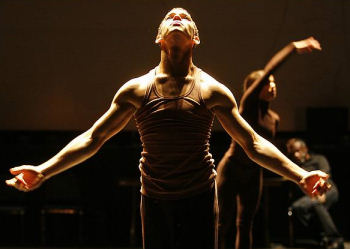
Byrd's 'Chekhovian Resolution'

Byrd's Chekhovian Resolution: can dance capture the blood, pain and suffering of this conflict? (Mike Urban/Seattle PI)

Last Saturday, I attended an amazing artistic event.  Donald Byrd’s contemporary dance group, Spectrum Dance Theater, performed his political-artistic meditation on the Israeli Palestinian conflict, Chekhovian Resolution.  It was titled after a phrase from Israeli novelist Amos Oz, referring to the melancholy resolutions of Chekhov’s plays in which no one gets what they want and everyone ends up diminished in some way, yet life goes on.

I was fascinated by the performance as soon as I heard it would happen because I’ve never heard of a dance performance that attempted to grapple with the Israeli-Palestinian conflict.  It seemed almost a contradiction in terms: how can an artistic form that eschews words make a cogent statement about such a bloody, intractable political struggle?  And what dance language would Byrd use to reflect on his subject?  And could it possibly do it justice?

Choreographing a dance about this war between Jews and Arabs seems like writing a poem about the Holocaust.  How do you encompass the enormity of the suffering in an artistic medium?

I am pleased to report that Byrd did an admirable job.  But he did it by fudging a bit.  This was not just a dance performance.  It was a passionate literary and political piece as well.  Words, those things which dancers tend to distrust, were a key element of Chekhovian Resolution.  This is turn set up an interesting tension.  Byrd decided that he could not encompass his subject with movement alone.  But how would the words and the movement interact with each other?  Would they co-exist peacefully or impinge on each other and diminish each other?

I found Byrd’s impassioned speeches and historical account of the conflict to be riveting.  He clearly had expert assistance in compiling  them because I didn’t hear a single error in all of the historical data he incorporated.  Nothing he said jarred me or made me think I was listening to a dilettante or meddler as sometimes happens when the inexperienced attempt to make their mark dealing with this arcane subject.  I thought everything Byrd said or did was true.  But I don’t mean this in an absolute sense. Rather, he had to freely concede that he had no clear answers, that everything he was saying might be wrong, etc. In other words, he had to both have a strong point of view and yet show humility. And that is a major accomplishment in a field where every word you say or gesture you make can give you away as an ideologue, ranter or fool.

I was also interested in the performance because one of Byrd’s collaborators was the Palestinian musician Wissam Murad.  I knew of him because he partnered with David Broza to create the first Israeli-Palestinian pop song, B’Libi.

Unfortunately, the U.S. embassy in Tel Aviv could not process Murad and his musical accompanist’s vias in time and they never made in to the U.S.  Their absence was felt deeply not just physically or artistically, but politically as well.  Apparently, in Palestinian society there is an artistic taboo against working with even the most progressive Israeli artists.  The Seattle JTNews reports that the renowned Palestinian oud player Simon Shaheen was one of those who turned down a collaboration with Byrd and his Israeli co-choreographers, Nir Ben Gal and Liat Dror.  Murad was the only Palestinian who would do so.

I realize that the issue of artistic collaboration is wrapped up in many political complexities.  But I cannot for the life of me understand why Palestinians would attempt to make a principled argument that such cooperation was trief.  How else can we establish a model for the peaceful future we envision if we don’t live that future now and through our art?  Artists are the visionaries.  They show us what can be if we will it.  But if we allow art to be held hostage to our impoverished political agendas then we’ve sold ourselves and our future out.

A Zis’n Peysach: Wishing You Joy and Redemption

Sunday, April 20th, 2008
sarajevo haggadah ma nishtanahThe Ma Nishtanah page from the Sarajevo Haggadah (source: Talmud.de)

To all my Jewish readers I wish a zis’n Peysach (” a sweet Passover”). I hope you enjoyed wonderful seders tonight and the same for tomorrow for those of you who do second seders.

Today, April 20th at 7PM Pacific time, KBCS will rebroadcast a one hour radio program I produced last year of Passover music (the program script and mp3s available here). The music covers the Jewish waterfront from Israel to North Africa, to the U.S.; from Ashkenazi to Sephardic; from contemporary to ancient. You can listen to the show Sunday live on radio (91.3 in Seattle), via audio stream, or listen here to the full hour program any time you like.

For those who would like to ponder deeper Passover themes, I wrote an essay some time ago exploring Moses’ identity and paralleling it with thorny issues of contemporary Jewish identity, Life of Moses as Allegory of Jewish Existence. I offer it to you for your contemplation.

Passover has always been one of my favorite Jewish holidays. I’ve found the seder to be one of the most accessible Jewish rituals for non-Jews. And further, the seder is full of wonderful, joyful music, good food and talk of liberation and social justice. Who could ask for anything more?

This link offers a sampling of past Passover themed posts I’ve written.

Seattle’s Medieval Women’s Choir Performs Sephardic Music

Sunday, March 9th, 2008

A few weeks ago I read that Seattle’s Medieval Women’s Choir would be performing Sephardic music tonight. That was a good reason to go since I love early music and Sephardic music. But an even more important reason was that I saw my old band mate, Shira Kammen was performing as accompanist. Way back in the early 1980s when we were both UC Berkeley grad students, my brother and I formed a Jewish music ensemble, Yasmine, which played in the Bay Area and recorded one audio tape, Jewish Songs of Celebration and Struggle. We also performed at the first Bay Area Jewish Music Festival which I founded with Gerry Tenney. When we first conceived of our group, Todd decided to invite Shira to join. She was a consummate fiddle player with a wonderful alto voice.

My brother is an excellent musician, far better than I. But Shira was the true professional among us. She was an elegant accompanist, never missing a note, never performing off key. She was always prominent in the mix but never too forward and never too far back. Not only that, but when two brothers perform together while their voices mesh wonderfully their personalities don’t always. Shira was the calm middle whenever there was tension. She had that wry, self-deprecating sense of humor that so many Jews share. She’s gone on to a professional career performing on medieval stringed instruments though her original one is the violin. Among the distinguished early music groups she’s belonged to are Ensemble Alcatraz and Ensemble P.A.N.

The concert was delightful. Here are Margriet’s insightful program notes. The choir was quite good but the soloists and accompanists were even better. Linda Strandberg had a vibrant soprano voice that conveyed the passion and intensity of the Sephardic melodies. I especially loved her opening the concert standing at the entrance to the synagogue’s sanctuary singing a very slow, resonant version of La Rosa Enfloresce (“The Rose Flowers”). The notes were piercing. The melody gorgeous. For my wife and I this was a special moment since this was the music we chose to walk down the aisle at our wedding. I first heard the song from a Hesperion XX record I bought while a grad student at UC Berkeley, right around the time Shira and I were in Yasmine together. I also note that Shira has performed with Hesperion XX, another indication of the high musical regard in which she is held.

Shira had great attack during her solos and accompaniment bringing gusto to the music. Her duets with Margriet Tindemans (also the Choir’s director), who played medieval fiddle, were exciting to listen to. The concert even featured two songs on Yasmine’s cassette, Dodi Li and Et Dodim, both from Song of Songs. During several songs, notably the sinuous vocal ornamentations of D’ror Yikra, it was all I could do to stop myself from joining along with the singing.

When I introduced myself during intermission I was delighted to find that she remembered me and our collaboration. It was so good to see her.

For anyone from Seattle, my wife and I ate at a new Asian noodle place called Boom Noodle on Capitol Hill. While the ambiance reminded me of a college cafeteria (big open tiled space with lots of reverb and noise of diners). People eat at long common tables so you don’t get a lot of privacy. But the food is quite extraordinary along with being relatively inexpensive. We had an appetizer, two noodle bowls, dessert and sake for $50 including tip. I had a seafood noodle soup with udon that included ling cod, penn cove mussels and shrimp. The mango mousse was delightful, closer to pane cotta than mousse. While Seattle is a good city for restaurants I’ve never been impressed by most of the Asian offerings. It’s great to have our first superb noodle house. Here’s the P-I review.

Youssou N’Dour’s New Rokku Mi Rokka

Saturday, November 17th, 2007


Youssou N’Dour, the Senegalese superstar, has a new album that came out two weeks ago, Rokku Mi Rokka. Robert Christgau, writing in his breezy style for Rolling Stone says:

…Here his strategy of moving a few favorite musicians north to Mali changes up the Senegalese mbalax he invented without surrendering its Sahel gestalt. Translations from the Wolof reveal lyrics about Senegalese independence, Sufi saints, the value of traveling, remembering, thinking. They’re worth following, as are the phonetic transliterations. But with N’Dour, the prime attraction is always musical, radiating out from a voice whose skylike clarity and beseeching high end would catch you short in a singer half his age, but always including striking multipart melodies and skilled guitar-bass-drums-drums-drums. Ali Farka Toure sideman Bassekou Kouyate banjo-fies five tracks on four-stringed ngoni. And if you’re good, Neneh Cherry will treat you to a duet on an English-language closer that’s worth the wait.

A new album from Youssou N’Dour is always an event and those who love African music look forward to such happenings with great joy.

The reviews seem to be mixed about the album. A savvy Amazon reviewer compares it slightly unfavorably to masterpieces like Immigres, Wommat, and Egypt. And it would be hard for any subsequent music to measure up to these massive achievements. Contrarily, Charlie Gillett, writing in the Guardian calls the record “adventurous and extraordinary, [the] album feels like a new pinnacle in Youssou’s career.”

Rolling Stone, unlike the parsimonious Amazon, lets you listen to the entire album if you install Rhapsody. Has anyone noticed that Amazon translates most of the song titles into English as if Americans would not be willing to buy an album whose song titles were in a foreign language? Preposterous.

Performance Optimization WordPress Plugins by W3 EDGE