Mahzor

New York Public Library

Churches

Sarajevo Haggadah

Mah Nishtanah

Sarajevo haggadah

Antaea Darom

Israeli women's art

Action

Torah as music

Ben Heine

Action

ceramic bowl

Mohammad Said Kalash, "Offering Reconciliation" exhibit (photo: Ilan Amihai)

Action

Punch and Judy/Pinchas and Jamila

Avi Katz

Action

David Grossman

Ben Heine

Action

Eldrige Street shul

Lower East Side

Action

Dove

Ben Heine

Action

Two birds

Hoda Jamal

Action

Israeli and Palestinian boys

from documentary, Promises

Action

Cat in the Hat

Yiddish version

Action

Daylight through the Wall

Banksy: graffiti art on Separation Wall

Action

Maurice Sendak's Brundibar set

New Victory Theater (photo: Nan Melville/NYT)

Action

Daniel Barenboim, West-Eastern Divan Orchestra

Palestinian-Israeli musical ensemble (photo: Kerstin Joensson/AP)

Action

Great Day on Eldrige Street

N.Y.'s klezmer greats celebrate shul rededication (photo: Leo Sorel)

Action

Joint Appeal for Peace

(Avi Katz)

Joint Appeal for Peace

Ketubah, Ancona, Italy (1772)

(Jewish Theological Seminary library)

Ancona ketubah

Posts Tagged ‘iran nuclear weapon’

Widening Regional Escalation Anticipated After Israeli Attack on Iran

Sunday, February 5th, 2012

Several interesting developments concerning the simmering war between Israel and Iran.  The website of the Iranian Majlis published a report (in Farsi) by the director of an official government think tank that advocates Iranian attacks against Israeli sites.  The author argues that Israel’s sustained attacks within Iran demand a response.  An Israeli TV news report says (in Hebrew) that the Iranian website calls for a “pre-emptive” attack on Israel, and not one that is purely in response to an Israeli first strike.  Though it is reflective of the Israel’s narrow thinking that they would call such an Iranian strike “pre-emptive,” when Israel has already attacked Iran.  One of the specific sites indicated for targeting was Sdot Micha, Israel’s secret missile base and home of its Jericho intercontinental missile arsenal.

You’ll recall that an Israeli source told me that a drone crashed into that base, which may’ve been tied to Iran and/or Hezbollah origins.  Whether or not this story was true, the new report from Iran indicates that the country’s leadership very much has this sort of strike in its mind and would be interested in responding to Israel’s numerous domestic attacks against Iranian bases and nuclear scientists.

A Western diplomat based in Pakistan has added a new wrinkle to the Israel war scenario.  He says a new player should be considered as a protagonist if Israel strikes:

A European diplomat based in Pakistan, permitted to speak only under condition of anonymity, said that if Israel attacks, Islamabad will have no choice but to support any Iranian retaliation. That raises the specter of putting a nuclear-armed Pakistan at odds with Israel, widely believed to have its own significant nuclear arsenal.

I personally think it’s unlikely Pakistan officially would join the fight on Iran’s side.  But it wouldn’t have to to weigh in on the subject.  Pakistanis already detest the U.S. for assassinating Osama bin Laden and our serial drone attacks which violate national sovereignty.  When Ayatollah Khomeini announced a fatwa against Salman Rushdie in 1989, the first nation which took up the call wasn’t Iran, but Pakistan.  It’s likely that Iran will activate its influence inside Afghanistan to make our lives miserable there should it be attacked by Israel.  With the Pakistani Taliban joining in the fight and attacking U.S. assets wherever they find them, it could make our presence in large portions of the region almost impossible to sustain.

Not to mention, while Iran doesn’t yet have a nuke, Pakistan does. While it likely would not use its nukes to defend Iran, just the fact that it has them automatically makes the calculations a lot more complex.

In the current climate, it’s hard to know what information is credible and what is based on exaggeration.  We need to weigh that in evaluating the value of the reports above.  But even if we downgrade some or all of it, in its entirety is signals an escalation in the thinking of Arab-Muslim elements in the region.  Many among them are already thinking about making Israel and the U.S. pay the price for attacking if they do.

Israeli strategic thinking on this subject remains mired in self-delusion:

Defense Minister Ehud Barak claimed during a high-profile security conference that there is a “wide global understanding” that military action may be needed.

“There is no argument about the intolerable danger a nuclear Iran (would pose) to the future of the Middle East, the security of Israel and to the economic and security stability of the entire world,” Barak said.

The opposite is the case.  There is a wide global understanding that military actions would be a very bad idea.  And there certainly is a strong argument against the idea that a nuclear Iran would pose a danger to world stability.  In fact, the only people who believe this are some of Israel’s top leaders, Islamophobes around the world, and neocons in the U.S. and Israel.  It’s interesting how Barak attempts to parlay that rather narrow body of opinion into an overwhelming world consensus.

Obama Administration: U.S. Would ‘Come to Israel’s Defense’ If Iran Attacked It

Thursday, February 2nd, 2012

David Ignatius published an alarming story in today’s Washington Post, in which he quotes Leon Panetta predicting an Israeli attack on Iran in “April, May or June.”  Buried deeper within the article is an even more chilling passage:

Administration officials caution that Tehran shouldn’t misunderstand: The United States has a 60-year commitment to Israeli security, and if Israel’s population centers were hit, the United States could feel obligated to come to Israel’s defense.

In the context of the article, which portrays an Israeli first strike against Iran, we can only explain this statement as announcing to Iran that if it counter-strikes against Israel that the U.S. will join in the war against it.  That would help explain why the U.S. is amassing a massive amount of firepower in the Gulf including perhaps a record three carrier task forces preparing for God knows what mischief.

I can’t say clearly enough that what the U.S. has signaled in Ignatius’ report is that if Iran is attacked, it may not strike back against its attacker.  If it does, the U.S. will rain down hellfire and damnation on it.  This is frightening beyond measure.  I’ve never known the U.S. to lay down such a principle which virtually assures our joining in a war against Iran.  Israeli policymakers will be delighted to read these words.  Hawks like Bibi, Barak and Bogie Yaalon (from whom, more later) will be sharpening their spears and pruning hooks, not to mention their Jericho IIs and U.S.-supplied bunker busters.

Of course, there’s always a chance that Panetta is bluffing, using psy ops to spook the Iranians into believing they will face two implacable foes in war if they don’t abandon their nuclear ambitions.  If we are bluffing, I’m afraid it won’t work.  Iran’s leaders are hardened, seasoned veterans of a 1979 Revolution and eight year war with Iraq in which they lost 1-million citizens.  They are inured to suffering of the sort we can inflict on them.

All of this means that Iran’s leaders are liable to shrug all this off as the price of doing business in a nuclear-weaponized world.  So what happens when Iran stands tall against such threats and says: “Is that all you’ve got?”  At that point, we’ve got nothing left but war.  And we’ve talked ourselves halfway into war through the belligerency of our rhetoric and threats.

Ignatius regurgitates more Israeli propaganda already disseminated in the New York Times that predicts Iran will mount at best a faint reply to an Israeli “surgical attack” on its nuclear facilities.  At most a few Hezbollah missiles and 500 Israeli deaths (to quote an infamous Barak prediction).  All the while ignoring the hundreds of Iranian missiles that could attack Israel and likely would if Israel attacked.  The idea that Israelis believe they have the right to launch a first strike against Iran, while Iran has either no right or no will to reply is so far-fetched as to be almost delusional given the nature of Iran, its leaders, and its military.

Here’s some more Israeli delusion:

“You stay to the side, and let us do it,” one Israeli official is said to have advised the United States. A “short-war” scenario assumes five days or so of limited Israeli strikes, followed by a U.N.-brokered cease-fire.

I can’t tell if this is certifiably delusional or merely a typically Israeli macho bluff.  But whatever it is it’s incredibly dangerous if any policymakers takes this remotely seriously.

Bronner quotes another typically narcissistic Israeli interpretation of the security threats it faces:

General Kochavi [IDF Aman intelligence chief] also estimated that Israel faced 200,000 missiles and rockets aimed at it from its enemies.

For the life of me, I don’t know where he gets such figures.  Hezbollah may have somewhere in the range of 10,000-20,000.  Gaza militants may have several thousand.  Iran has perhaps in the hundreds of missiles capable of reaching Israel.  That’s it.  Is he including Turkey’s missile capabilities in that number?  Even if so, would Turkey have 150,000 missiles in its inventory?  I doubt it.  In addition, including Turkey in that count means the IDF has now declared the former as a formal military enemy, when I hadn’t heard of any outright hostilities between the two that would justify such an evaluation.

moshe yaalon

Former IDF chief of staff Moshe Yaalon marches to war against Iran ( Ariel Jerozolimski)

Even more strange is Kochavi’s neglecting to mention the 200-400 Israeli nukes pointing at those same enemies along with a massive missile inventory of Jericho and other missile types capable of sending them anywhere in the Middle East.  Isn’t it convenient whenever Israel wishes the world to shed tears on its behalf, it omits the offensive threat that it poses to its neighbors.

Annually, the Herzliya conference features the creme de la creme of Israel’s political-military-intelligence echelons boasting about Israel’s achievements on the world stage.  It’s Israel’s version of Davos minus any discussion of issues having even a faintly progressive aspect.  That means leaving out social and economic justice, peace, environment, civil rights, etc.

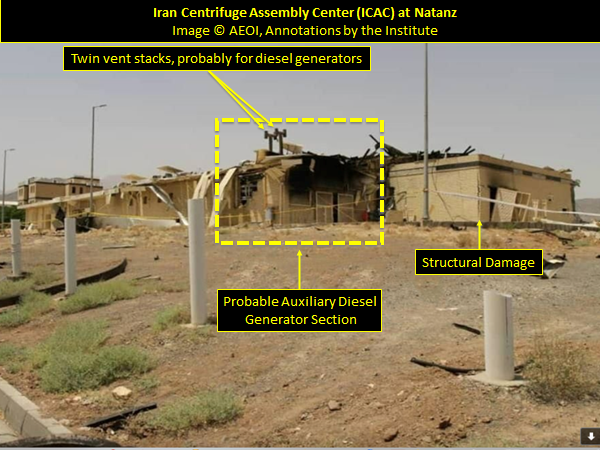
Israeli minister Bogie Yaalon, one of Israel’s leading hawks on the question of Iran war, dropped a bombshell into the political debate by claiming, during his conference presentation, that the Iranian missile base destroyed by a massive explosion several weeks ago was testing a new intercontinental missile prototype with a 6,000 mile range.  For those who are geographically-challenged, that’s long enough to hit the U.S.

Yaalon and his faithful scribe, Ethan “Eytan” Bronner, made sure American readers understood the “threat” this personified:

The Israeli, Moshe Yaalon, a deputy prime minister and minister for strategic affairs, said the blast at a missile base of Iran’s Islamic Revolutionary Guards Corps hit a system “getting ready to produce a missile with a range of 10,000 kilometers.”

“That’s the Great Satan,” he said, invoking a name Iran has used for the United States. “It was aimed at America, not at us.”

Mr. Yaalon was trying to make the point that the Iranian nuclear program is a threat not only to Israel but to other nations, creating “a nightmare for the free world.” He said that it was a concern to Arab states as well as to the United States and Israel.

You can say something on Bronner’s behalf: at least he includes this passage, which in effect reveals that some U.S. officials believe Yaalon is a liar (though they use language far more diplomatic than that):

American officials said they believed that Mr. Yaalon’s assertions were at best premature, and at worst badly exaggerated.

Though one Iranian-American expert on Iran’s military programs does deride Yaalon’s claims.  It should be pointed out that this source, USC engineering professor Muhammad Sahimi (Wikipedia article), is by no means a friend of the Iranian regime:

This is total nonsense. Iran has said many, many times that it is not developing, and has no interest in developing an intercontinental missile. This is another bit of lies and propaganda by Yaalon to present Iran as a worldwide threat…

My high-level Israeli source also called Yaalon’s claims “exaggerated” and said they were “probably meant to frighten the American public.”

Israeli Film Depicts Iranian First-Strike Nuke Attack on Israel

Tuesday, January 31st, 2012


The Israeli power of delusion is evident in this short film called, The Last Day, which purports to film the last moments of an Israeli family before Iran drops a nuclear bomb on Israel and obliterates it. The film, created by Ronen Barany, is shot in faux-documentary style with lots of shots of Israelis in extremis including suitably shaky, off kilter camera angles proclaiming it a product of ersatz cinema verite.

While the computer enhanced graphics showing massive explosions in the Israeli hillside may shock Israelis used to viewing a relatively tranquil landscape, the boom-boom screams out “computer enhancement.” If this were still photography critics would call it a photoshopped reality. We’ll have to come up with another name for an altered reality via video.

It should go without saying (but I’ll say it nevertheless), that the film is even more interesting for what it leaves out than what it includes. It presumes a backstory which the viewer fills in (hence the power of effective propaganda) of a hegemonic power-mad Iran hell-bent on getting nukes and using them on its bitterest foe, Israel. The poor Israeli shlumps in this movie are of course the collateral damage of Iranian megalomania. They’re innocent victims. No reference to any role Israel itself may’ve played in this conflict. Israel is doing nothing but defending itself from pure evil.

This film is a perfect example of how an entire people can be anesthetized and transported into an altered state of reality that shows them to be innocent lambs led to the slaughter; when in fact they are just as much agents of their own destiny as their enemies are.

The fact that this film is pimped by a RP rep for 5W PR, Ronn Torossian’s agency (who also pimps the Clarion Fund anti-Muslim films along with porn stars and has been charged with extorting millions of dollars from the followers of an Israeli Sephardic wonder rabbi) tells you reams about the film’s subtext.

Popular Culture Exposes Racism That Enables Israeli War Fever

Tuesday, January 17th, 2012

When a nation goes to war, there are all sorts of motivations, policy deliberations, and cultural attitudes that contribute to such a decision.  Popular culture offers a window into a nation’s consciousness.  It shows how a country can be conditioned to anticipate, accept and even endorse a war.  An Israeli reader sent a link to this TV commercial for the Israeli cable provider, HOT.  The general pitch is that if you buy a particular set of HOT services you win a free tablet PC.  The setting is a beat-up bus in which a group of Israeli slackers, possibly freelance agents, sit around playing guitar and doing nothing in particular.  This is a reference to a popular Israeli TV show, Asfour, portraying a group of Israeli low-lifes who live in an abandoned bus.

Thanks to Dena Shunra for offering a translation of the dialogue.  There are a few snippets that are in Arabic or just hard to figure out.  If any Israeli readers can complete the picture, let me know:

[Khaki camouflage packet/jacket falls from above]

What, are we getting ready for Rajuan?

No, it’s Shin, Isfahan.

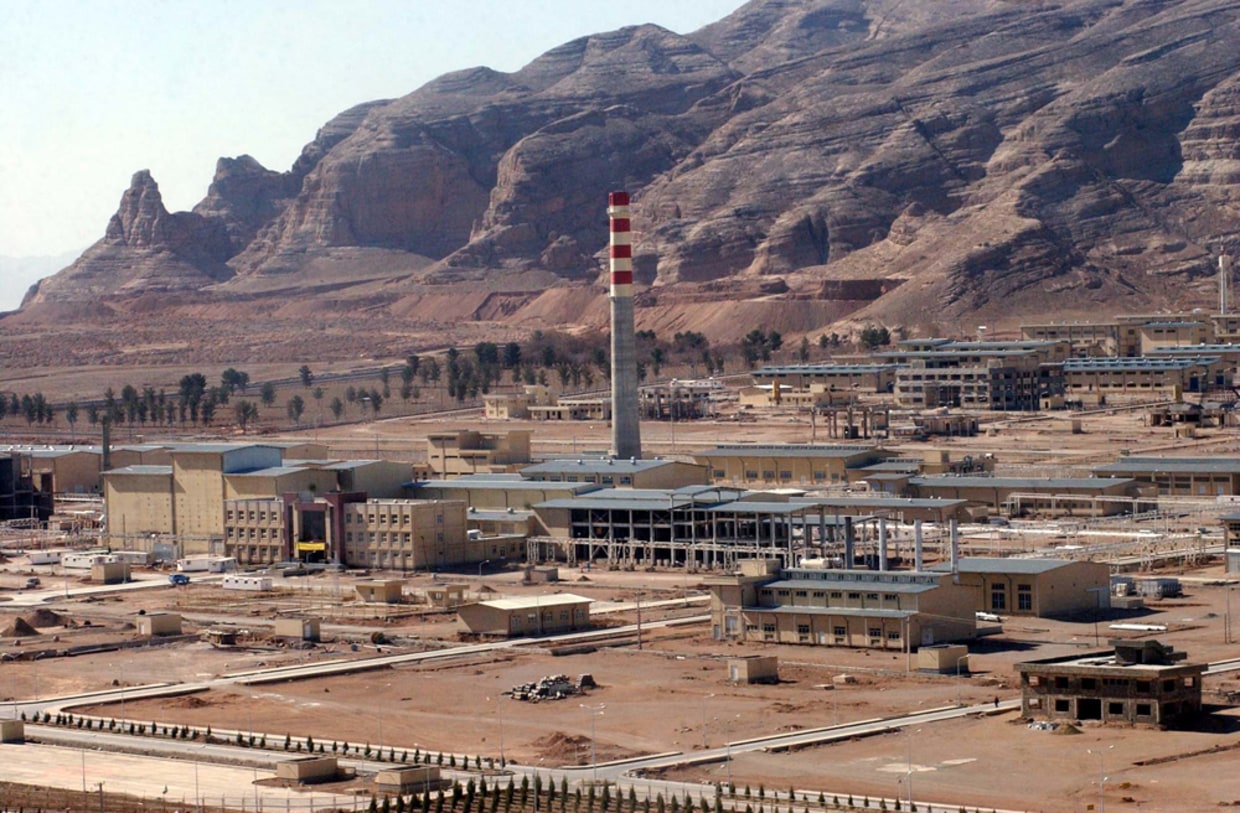
[Caption title:] Isfahan, Iran. Near the nuclear reactor.

[Same group approaches dressed as Iranian women]

I bet they don’t even get Asfour [Israeli TV show] in this hole.

It’s G_d’s own fright!

Yeah, where will we find a kosher kitchen?

Maybe we’ll run into the family of [prominent Israeli-Iranian singer] Rita.

[One dabs sunscreen on face as others look on in shock.]

What do you want? Do you have any idea how much radiation there is around here?

[One member of the group nods in direction of man sitting at a table.  They approach him.]

Slacker: Is that you from the Mossad?

Mossadnik: Shhhhh.

Slacker: Whaddaya mean shhhh?  There’s no shame in it.  We were also in an institution [mossad can mean the intelligence agency or a mental institution] for a while.

Tell me, ShuShu [Mossadnik] – did you bring us all the way here?

Mossadnik: I’ve been going through two months of stake-outs. It’s deathly boring [literally: boring like missiles] I watch a few episodes on my tablet; reactor or no reactor, I don’t miss an episode of Asfour.

Slacker: Whoa, cool, a tablet. You’re pampered there in the Mossad.

Mossadnik: [Sarcastically] Yeah, right. It’s from HOT. My wife did a triple deal with HOT and all the programs for free.

Slacker: Are you kidding us?

Mossadnik: We even got the HOT VOD app and all the programs – as a gift.

Slacker: Hey, what’s that application? [Reaches for the tablet and clicks app icon]

Whoa-whoa-whoa

[Boom--explosion]

Slacker: What do you want? Just another mysterious explosion in Iran.

[Next scene: the crew sits laughing and joking with Mossadnik enjoying the tablet.  One smashes a bug and says:]

Yuck, a Khomeini [Hebrew colloquialism for "scarab"--Iranians get up to see what he's talking about.  Israelis react fearfully to exposure.]

There’s always a fine line between political parody and racism.  It’s often hard to say where one bleeds into another.  But the humor of this commercial exposes the moral anaesthesia Israelis undergo, which allows them to be isolated from the impact of the acts of their military and intelligence forces in the region.  Instead of a conscious act of sabotage, a bumbling Israeli intelligence agent clicks a button on a tablet application and–Oops!–there goes another Iranian nuclear facility.  More Keystone Cops than Mossad cloak and dagger.

At the conclusion, another Israeli swats and kills an insect pest called a Khomeini.  The irony of the term and racial hostility inherent in it is self-evident.  Yet another marker for the anti-Muslim hate afflicting contemporary Israel.  Yes, a nation has to laugh at itself especially in times of tension.  But laughter of the sort in this commercial doesn’t encourage thought or introspection.  It doesn’t probe reality.  It allows Israelis to sink back in their economic largess, to luxuriate in the consumer options (like HOT cable service) available to them, while the harmless bumblers of the Mossad go around blowing up Iranian nuclear plants almost by accident.

It all ends with a nudge-nudge, wink-wink that would be fitting for a Monty Python routine, except the Pythons would’ve been savaging cultural norms instead of laughing about them.  Israelis, unfortunately, don’t have that distance from the crimes done in their name.

Israeli Security Think Tank Simulates Iranian Nuclear Test

Tuesday, January 10th, 2012

Sheera Frenkel has published a story in the Times of London (article accessible only to subscribers) about a simulation conducted by the Institute for National Security Studies, a Tel Aviv University affiliated think tank with close ties to Israeli military and intelligence elements.  Among those who participated were a variety of figures from Israeli diplomatic, intelligence and political echelons including Giora Eiland, Bibi Netanyahu’s former National Security advisor and Alon Liel, former Director General of the Foreign Ministry during Ehud Barak’s prime ministership.  Though I’m not clear on the political affiliations of all the players, it appears they made an attempt to include a cross-section of views from hawkish to pragmatic/liberal.

One of the key takeaways of Frenkel’s article is this:

Israeli officials have begun preparing scenarios for the day after a nuclear weapons test. The move is a tacit recognition that Israel is backing away from its long-held position that it would do everything in its power — including mounting a military strike — to stop Iran acquiring nuclear capabilities.

…The scenario laid out by the INSS suggests that the possibility that Israel has to “live with it” might become a reality.

This thinking is very much in synch with the campaign of Meir Dagan to prevent Israel from attacking Iran in order to sabotage its nuclear program.  The former Shin Bet chief clearly wants his country to prepare to devise ways to contain any threat an Iranian nuclear weapon might post to Israel, short of military strike.

Though I find the results interesting, I think I’d challenge some of the key underlying assumptions.  The first one being that Iran tests a nuclear device in January 2013:

…A series of regional and international developments is likely to cause Iran to decide to accelerate its nuclear development and to break through toward nuclear weapons…

I think it far more likely that Iran will do computer simulations of such tests rather than carrying out a physical test.  The only nations which conduct actual tests are ones who desperately need to send a message to their adversaries and feel little concern for the repercussions of doing so.  Iran may wish to send such a message, but I don’t believe it’s interested in risking the result.  So I believe that it will deliberately pursue the sort of nuclear opacity Israel observes.  It will conduct nuclear research that could enable it to build a weapon if it needed to do so.  But it will not actually do so.  This is the model that Japan has observed.

But if we’re willing to accept the assumptions of the simulation, the outcomes are interesting to consider (and also worth disputing in part).  In order to restrain Israel from retaliating, the U.S. would propose a formal defense pact and bring Israel into NATO.  As a result, Turkey would withdraw from that organization.  Russia would propose a defense pact in order to combat nuclear proliferation in the region.

This conclusion seems also odd to me.  I believe that Russia might propose invigorating the NPT and pressuring all Middle East countries to join.  It might also join the U.S. in proposing a Mideast nuclear free zone.  But a defense pact?  I just don’t see it.  Why?  What would Russia gain?  Why would Russia fear an Iranian weapon, since it is helping Iran’s nuclear program?

Frenkel says that Saudi Arabia would go it alone and develop its own nuclear program.  Again, I just don’t see that country having the expertise to do this though of course it would have the finances to support one.  In other aspects of the simulation, Egypt proposes military action against Iran and Turkey would “avoid a showdown.”  Given that country’s hostility toward Israel and reasonably friendly relations toward Iran, this is an understatement.  I think it’s far more likely that Turkey would actively join any serious effort both to strengthen the NPT in the region and/or create a nuclear free zone.

This conclusion regarding Iranian goals in gaining a nuclear weapon does seem reasonable to me:

“The simulation showed that Iran will not forgo nuclear weapons, but will attempt to use them to reach an agreement with the major powers that will improve its position.”

Though this subject isn’t mentioned, it seems clear to me that if anything Iran would seek to pressure the world community to recognize it as a full player, which would include ending sanctions and full diplomatic recognition.

Performance Optimization WordPress Plugins by W3 EDGE